
Where most retail and hospitality businesses are sitting on more profit than they realise
Most retail and hospitality businesses focus on getting customers through the door, and that’s getting harder. Costs are up across the board. Whether it’s ads, rent, staff or just time, you’re easily spending somewhere in the region of £15–£58 to get someone through the door in the first place.
Then the sale happens… and that’s usually where it ends.
There’s often no real structure around what they spend while they’re there, no real reason for them to come back, and nothing that carries the experience forward once they’ve left.
So a lot of the profit is already sitting there, it’s just not being taken.
Where the money is actually made
Getting the customer feels like the hard part, so naturally that’s where most of the focus goes. More footfall means more orders.
But what actually separates businesses that do well isn’t just how they get customers, it’s what they do with them once they’re there.
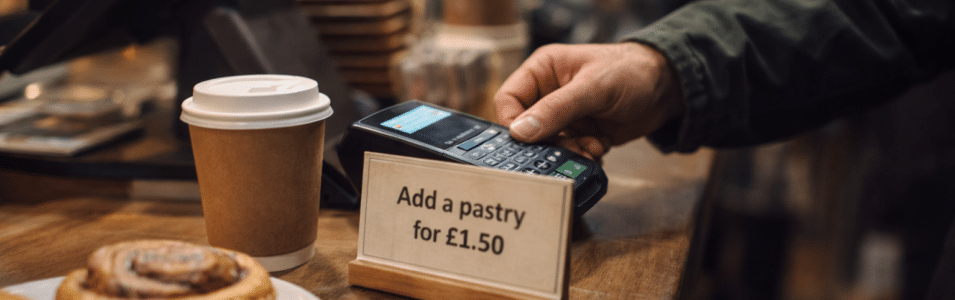
They make it easy for people to spend a bit more while they’re there, whether that’s how things are grouped, what’s visible at the counter, or what feels like the obvious choice. There’s a very good reason impulse buys like chocolate and sweets sit right next to the till at petrol stations.
They give people a reason to come back, not in a vague “see you again soon” way, but something tangible that carries forward after the visit.
And they don’t rely on memory. They leave some kind of reminder behind, physical or otherwise, so they’re not starting from zero the next time.
Most businesses don’t do this consistently. The customer buys once and leaves, and that’s effectively the end of it. No prompt to add anything, no follow-up, no reminder, no real reason to return.
So the next sale has to be won all over again.
The gap
If someone comes in, spends £20 and never returns, that’s just a one-off transaction. Often break even at best if aquired through ads.
If that same person spends £30, has a slightly better experience, and comes back a couple more times, the value of that original visit changes completely, and those repeat visits carry very little additional marketing cost.
That difference isn’t down to luck. It comes from what happens during and immediately after that first sale.
Most retail and hospitality businesses don’t really control that well enough, not because they’re doing anything wrong, but because it’s not something they’ve ever properly looked at.
And that’s usually where a lot of the missed profit sits.
What this actually looks like in practice
This isn’t about turning everything into a hard sell or pushing staff to upsell more aggressively. Most of the time, it’s much simpler than that.
It’s about putting a bit more structure around what already happens every day and making it easier for someone to spend slightly more while they’re there.
Giving them a clear reason to come back, not just hoping they will, and making sure something of your business stays with them after they’ve left, rather than disappearing the moment the transaction is done.
Small changes compound quickly when you see the same behaviour repeated dozens of times a day.
The tricky bit is knowing where to focus.
Some businesses are already decent at getting people through the door but don’t do anything to increase spend. Others get good spend but don’t give people a reason to come back. Most sit somewhere in between or haven’t really looked at it properly.
That’s exactly what our scorecard is for, It shows where you’re likely leaving money on the table. Whether that’s order value, repeat visits, or what happens after the sale it gives you a clear idea of where to focus first.
It takes a couple of minutes to go through and points you to the area that’s most likely to make a difference.