
Where most retail and hospitality businesses are sitting on more profit than they realise
Getting new clients is like starting a new relationship, you have your type (ideal client), you visit places you are most likely to meet them (bars, clubs, apps etc.) and then you exchange numbers and have your first interaction where you get to know each other. This is like your quoting or visiting stage. Then you make your first transaction – this is your first date.
In businesses it’s easy to assume that a great first date (transaction) guarantees a second one but, as with dating, we know that’s not the case – at the very least you’d follow up with a message.
It’s so easy to get caught up trying to win new customers that we forget the basics, like upselling and giving customers a reason to return.
Where the money is made
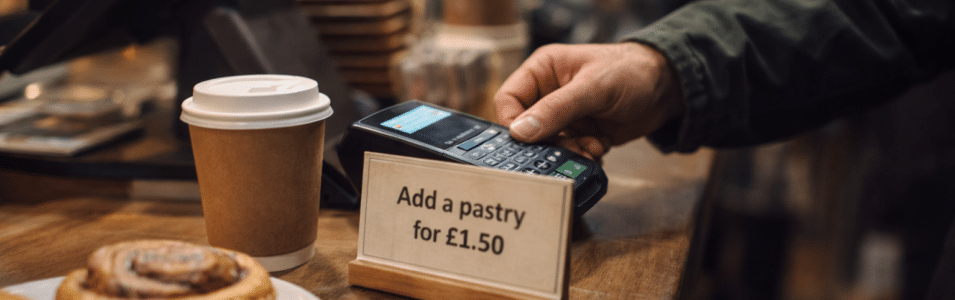
The businesses we see doing well are courting their customers over the lifetime, the best businesses make them feel like they’re part of a community or exclusive group. They also make the upsells automatic rather than relying on staff training. Things like offers on counters do a lot of the hard work for you. It’s why confectionery sits next to the till in petrol stations and they offer quick impulse buys like head torches or ice scrapers at the till.
Shops like IKEA also funnel you through the whole shop, even if you just want a spatula. It’s all designed to make you spend more.
Then they follow up, they don’t rely on memory. They use loyalty schemes, emails, something physical. It’s often much cheaper to get a second transaction than it is to start from zero and win another new customer. I read about a restaurant who, on first visits, gave a voucher for a free steak meal on the second visit because it was cheaper than the ad spend to get another new customer and he wanted them to become lifetime clients.
Most businesses are generating plenty of first dates but then wondering why they’re not getting to second base without doing any of the follow-up.
They are trying to win the next sale from scratch every time.
The gap
It’s not a comfortable thought but some businesses are willing to lose money on the first transaction. If the cost of customer acquisition (via ads or marketing) is £50 but they will on average only spend £60 that’s a hit to cash flow but they look at the life time value not just the return on first spend.
However, if you can nudge up the first transaction to £75 and then increase the amount of repeats, the lifetime value of those customers more than makes up for the initial hit.
According to Harvard Business Review, increasing customer retention by just 5% can increase profits by 25% to 95%. So you have to look at the whole picture rather than just the first transaction. If you can increase how much customers spend and how often they come back, the cost of acquiring them becomes a much smaller percentage.
This also doesn’t include referral schemes and recommendations from regular, happy clients. How many times have you tried a new restaurant because it’s been recommended by two or three friends? The return on marketing spend is very hard to track on things like this.
What this actually looks like in practice
This article isn’t about hard selling or aggressive staff pushing deals, most of the time, simple, repeatable actions can have a bigger impact. Simple consistency will beat a short burst of intensive effort every time.
Give customers a clear upgrade path and reason to come back. Most of all, don’t disappear after you’ve had your date and paid the bill, keep reminding them you exist (but no unsolicited pictures!!).
Small changes compound quickly, a change in structure on your website to give clear price options or upgrades, for instance. Or, my favourite, a loyalty/referral scheme where they take something physical away and feel like they are getting something for free.
The cost of not doing this
If you can increase repeat business, you’ll become much less reliant on chasing new customers, not that you shouldn’t, but you’ll remove some of the stress.. You’re working hard right now going on 100s of first dates but if you’re forgettable and don’t follow up then your dates will find other people and you’ll keep buying steak dinners and bottles of wine chasing the next one. Let’s face it, wouldn’t a Netflix and chill be nicer?
The tricky bit is knowing where to focus.
I know there are businesses that are great at some of these things but for others, it can feel like we’re already spinning 1000 plates and don’t have time to add any more.
In fact, when we see a shiny new plate or idea it’s tempting to be drawn in and add more to your act and we don’t focus on anything – just reacting to whichever plate is spinning slowest.
What we’re suggesting is focusing on one or two key areas and creating simple, repeatable tasks that won’t drain more of your time once implemented. They should be as simple and regular as taking a credit card payment.
We’ve created a scorecard that will take less than two minutes. Based on the answers you give about your business it will recommend the area we think you can focus on first to make the biggest difference.