
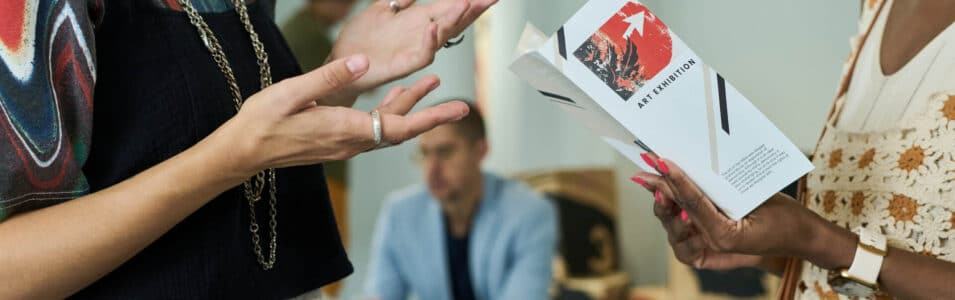
How to create an effective event brochure
Professionally made and effective event brochures do more than simply provide much needed information. They build anticipation and should guide visitors through the day, evening or weekend.
The very best event brochures combine strong graphic design and branding with clear messaging and quality brochure printing. From the layout and design of the front cover to the inner page paper stock, every detail matters to how the event is perceived.
Whether you’re producing a simple folded leaflet or a multi-page event programme, the insights below will help you create brochures for events that inform and engage.
Clarify the purpose of your event brochure
The most effective event brochures are created with a clear purpose. Every bit of content and every image should support it. Without this, it’s easy for the brochure to be cluttered or confusing. In many cases an event brochure will need to be designed to both promote the event in the build up, and guide visitors once they are in attendance.
It’s important to think about the audience and why they should attend. An indoor business conference brochure will require a different approach from an outdoor family fesitival guide. Understanding who will be reading and using the brochure should in turn ensure the content is relevant and engaging.
Plan the essential information attendees need
No matter how striking the brochure design is, if it doesn’t meet the primary purpose, it will be ineffective. Readers and attendees should be able to quickly find the details they need.
Event details
Every event brochure should clearly display the event name, date, time and location. Contact details, website information, and registration instructions should also be easy to find. If attendees need tickets, passes, or advance booking information, make sure it is prominently included.
Schedule or agenda
Attendees want to know what’s happening, when it’s happening, and where they need to be. Include session times, speaker presentations, workshops, entertainment, networking opportunities, and any other key activities.
Maps & venue information
For larger events, maps can be extremely useful. Venue layouts, room locations, parking information, accessibility details, and directional guidance help visitors navigate the event with confidence and reduce confusion on the day.
Calls to action
Include QR codes linking to websites, event apps, social media channels, sponsor websites, or future event registrations. These small additions help extend the value of the brochure beyond the event itself.
Use clear imagery and consistent branding
Before attendees read a single word, they will form an impression based on the design and imagery. Whether you’re promoting a conference, exhibition, charity event, festival, or corporate function, images help bring the event to life.
Consistency is equally important. Your event brochure should align with the branding used across your website, social media channels, email campaigns, and other marketing materials. Consistent use of colours, fonts, logos, and graphic elements helps create a cohesive identity and makes your event appear more organised.
Avoid the temptation to overcrowd pages with too many images or design elements. White space is just as important as the content itself. A clean layout makes information easier to read and allows key messages to stand out.
Choose the right brochure format and print finishing
Different types of events require different approaches.
Brochure format
Simple folded leaflets work well for shorter events or promotional handouts, where information is limited and easy to digest. For bigger events such as conferences, exhibitions, or multi-day festivals, stapled booklets or multi-page formats are often more suitable.
Paper stock
Paper choice plays a key role in how your event brochure is perceived. Lighter stocks may be suitable for short-term use or large print runs, while heavier or premium stocks help create a higher end and more durable brochure.
Finishing options
Matt or gloss lamination can improve durability even more and enhance the look and feel. Premium finishes such as soft touch coatings or spot UV can add luxury.
Sustainable Printing Considerations
At Inkwell Printing, sustainability is not simply treated as an added extra. It sits at the centre of how we approach print production and the way we work with our customers. Training manuals are often produced in large quantities and updated regularly, which means the materials and production methods used can make a real difference over time. That’s why we focus on offering more environmentally responsible print options without compromising on quality, durability or presentation.
From selecting recycled paper stocks through to printing more accurate quantities and choosing durable formats that reduce future waste, sustainable print is often about making considered decisions rather than dramatic choices. Our aim is to achieve that balance between environmental responsibility and quality print production.